Contents
- The four ingredients
- Baker's percentages
- Recipe: Neapolitan-style dough, 24-hour rise
- Kneading by hand or by machine
- Bulk fermentation vs. ball fermentation
- Yeast by time and temperature
- Dough styles compared
- Shaping: where the rim is made
- Baking: your oven sets the strategy
- Quick troubleshooting
- All dough articles
Here is the funny thing about pizza dough: it is just flour, water, salt and yeast. Four ingredients you can buy anywhere. Yet a pizza from a good stand or pizzeria tastes nothing like the one most of us make on a baking tray at home. The difference is rarely a secret ingredient. It is ratio, time, temperature and a bit of practised handwork, and that is what this guide is about.
We will walk you through baker's percentages, a full Neapolitan-style recipe with a 24-hour rise, kneading, fermentation, shaping and baking, and we will be honest about what changes when your only oven is the one in your kitchen. Each deeper topic has its own article, linked along the way.
The four ingredients
Flour
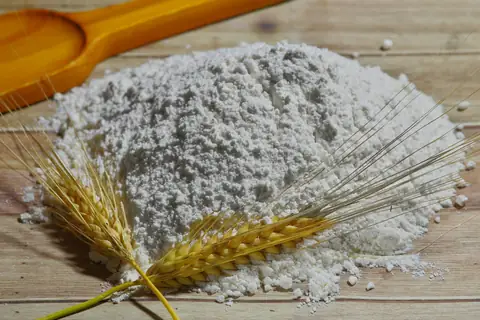
Flour is the structure. When you knead it with water, the proteins gliadin and glutenin form gluten, a stretchy network that traps the gas produced by the yeast. A dough that ferments for a day needs gluten strong enough to last that long, but not so tight that the dough keeps springing back when you open it.
The Italian classic is tipo 00. Under Italian law, though, the "00" mainly tells you how finely and how white the flour is milled, measured by its ash content. It says little about strength: a tipo 00 can be a soft cake flour or a robust pizza flour. Strength is described by the W value. The AVPN rules recommend a tipo 00 with W 250 to 320 and 11.5 to 13.5 % protein for long rising times.
If you shop outside Italy, the labels look different. Our guide to flour types for pizza explains Italian and German grades, protein and W value.
Water
Ordinary drinking water is fine. Its temperature matters more than its source, because cold water slows the yeast down and warm water speeds it up. For a room-temperature rise, start with water at about 20 °C. The amount of water is called hydration, and it deserves its own deep dive: hydration explained.
Salt
Salt seasons the dough, tightens the gluten and slightly slows fermentation. Neapolitan doughs usually sit at 2.5 to 3 % of the flour weight. Fine sea salt dissolves quickest.
Yeast
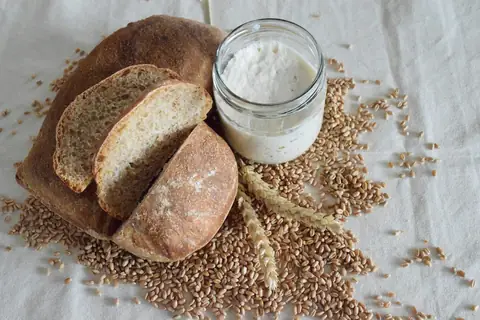
Fresh yeast, dry yeast or sourdough can all work. For long fermentation you need surprisingly little, often less than a gram. Lots of yeast gives a fast rise but little flavour; a pinch of yeast and plenty of time lets the dough develop real character. Our article on yeast versus sourdough helps you decide.
Baker's percentages
Professional dough formulas are written in baker's percentages. Flour is always 100 %, and every other ingredient is expressed relative to it. So 60 % hydration means 60 g of water per 100 g of flour, and the total always comes out above 100 %.
This lets you scale any formula in seconds and compare recipes at a glance.
| Ingredient | Baker's % | For 615 g flour |
|---|---|---|
| Flour | 100 % | 615 g |
| Water | 60 % | 369 g |
| Salt | 2.8 % | 17 g |
| Fresh yeast (24 h, about 20 °C) | 0.1 % | 0.6 g |
| Total dough | 162.9 % | about 1000 g |
To work backwards from the number of pizzas, divide the total dough weight by the sum of the percentages: 4 × 250 g = 1000 g, divided by 1.629, gives about 614 g of flour. Our dough calculator does exactly this and also suggests a yeast amount for your time and temperature.
Recipe: Neapolitan-style dough, 24-hour rise
This recipe follows the parameters set out in the AVPN rules for Verace Pizza Napoletana: a direct dough with no preferment, only flour, water, salt and yeast, and a total fermentation of 12 to 24 hours at room temperature. It makes four dough balls of about 250 g.
Ingredients
- 615 g Italian tipo 00 or tipo 0 flour
- 369 g water, about 20 °C
- 17 g fine sea salt
- 0.6 g fresh yeast (or about 0.2 g active dry yeast)
Method
- Dissolve: Put the water in the bowl and dissolve the yeast.
- Mix: Stir in a third of the flour, then the salt, so salt and yeast do not meet undiluted. Add the remaining flour gradually.
- Knead: By hand or machine until smooth and supple (details below).
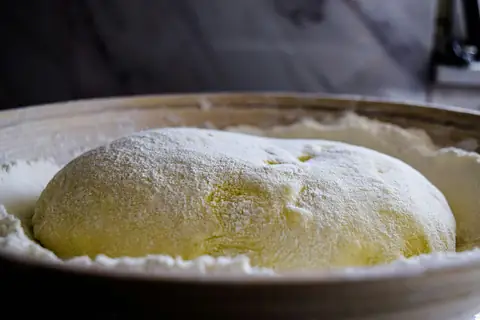
- Bulk fermentation: Cover and rest for about 2 hours at around 20 °C.
- Ball: Divide into four 250 g pieces and shape tight balls. Place them, spaced apart, in a lightly floured container with a lid.
- Ball fermentation: Leave for about 22 hours at around 20 °C.
- Bake: Preheat thoroughly, open the ball, top and bake.
If your kitchen runs much warmer than 20 °C, the dough will move faster. Cut the yeast, or switch to a cold fermentation in the fridge.
Kneading by hand or by machine
Kneading organises the gluten so the dough can hold gas. Too little and the dough is slack and tears. Too much, especially in a fast mixer, warms the dough and makes it tough.
By hand
The dough will be sticky at first; that is normal. Resist adding more flour and keep going: push, fold, turn. After 10 to 15 minutes it becomes smooth and springy. A 10 to 15 minute rest halfway through helps, because the gluten keeps organising itself while you wait. Some bakers let flour and water soak before kneading, a step called autolyse. It is not part of the classic Neapolitan method, but it does no harm.
By machine
The AVPN describes the machine method like this: water first, then salt and yeast, then the flour added gradually over about 10 minutes until the dough comes together, followed by no more than 20 further minutes of kneading, depending on the mixer. At home, use a low speed and check the dough by feel. Our guide to mixers for pizza dough covers which machines handle it well.
When is it done?
- The surface is smooth and slightly silky.
- The dough clears the bowl and barely sticks to your hands.
- A small piece stretches thin without tearing straight away.
Bulk fermentation vs. ball fermentation
Fermentation happens in two stages: first the whole mass (bulk), then the individual dough balls.
| Stage | What happens | Typical length (24 h dough) |
|---|---|---|
| Bulk | Yeast gets going, gluten relaxes, first flavours develop | 1 to 2 hours, sometimes much longer |
| Balls | Balls mature, become airy and extensible | the rest of the time, here about 22 hours |
A long bulk and short ball stage gives a stronger, bouncier dough. A short bulk and long ball stage gives relaxed balls that open easily. The AVPN allows both as long as the total stays between 12 and 24 hours. Longer schedules usually rely on refrigeration, see cold fermentation. Preferments such as poolish or biga are another route to flavour, but they are not part of the classic direct dough.
Yeast by time and temperature
These are starting values for fresh yeast in a direct dough, relative to the flour. They match the presets in our dough calculator.
| Fermentation | Fresh yeast | Active dry (about 1/3) | For 615 g flour (fresh) |
|---|---|---|---|
| 8 h at 22 °C | about 0.25 % | about 0.08 % | about 1.5 g |
| 12 h at 20 °C | about 0.2 % | about 0.07 % | about 1.2 g |
| 24 h at 20 °C | about 0.1 % | about 0.03 % | about 0.6 g |
| 24 h cold (4 °C) + 2 h room temp | about 0.25 % | about 0.08 % | about 1.5 g |
| 48 h cold + 2 h | about 0.15 % | about 0.05 % | about 0.9 g |
| 72 h cold + 2 h | about 0.1 % | about 0.03 % | about 0.6 g |
Active dry yeast is roughly a third of the fresh amount; instant yeast a third to a quarter. Flour, water temperature and room climate all shift these numbers, so treat the table as a starting point and keep notes. With sourdough (starter at 100 % hydration), use about 8 % for 24 hours up to 20 % for 8 to 10 hours.
Dough styles compared
Different pizzas want different doughs. These reference values come from our calculator.
| Style | Hydration | Salt | Oil | Sugar | Ball weight |
|---|---|---|---|---|---|
| Neapolitan | 60 % (55 to 65) | 2.8 % (2.5 to 3) | - | - | 250 g |
| High-heat mobile oven / market pizza | 62 % | 2.5 % | 1 % | - | 250 g |
| Teglia / al taglio | 75 % | 2.2 % | 3 % | - | 300 g per tray portion |
| New York | 62 % | 2.2 % | 2 % | 1 % | 280 g |
Neapolitan dough skips oil and sugar because it browns in seconds at very high heat. New York style bakes cooler and longer, so oil and a little sugar help with colour and tenderness. Roman pan pizza, teglia, uses lots of water and oil for an open, crisp crumb.
Shaping: where the rim is made
How you open the ball decides your cornicione, the puffy rim.
- Lift the ball out with a dough scraper and dip it briefly in flour or semolina.
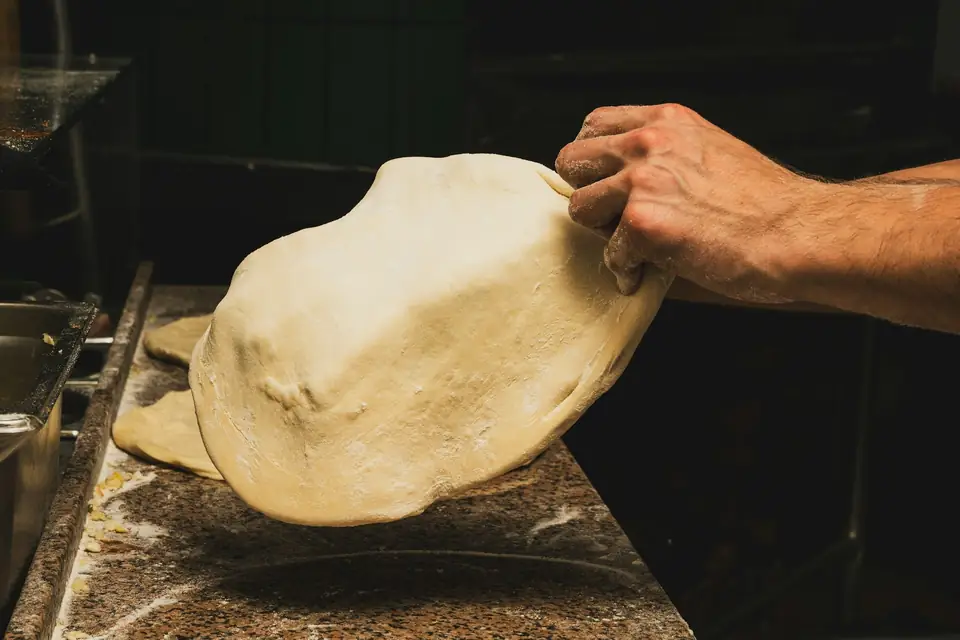
- Press from the centre outwards with your fingertips, leaving a 1 to 2 cm border untouched. That is where the gas stays.
- Drape the dough over the backs of your hands and stretch gently while turning. A 250 g ball makes a pizza of roughly 28 to 30 cm.
- Slide it onto a floured peel, top quickly and bake.
Skip the rolling pin. If the dough keeps shrinking back, it is under-proofed or too cold; give it 15 to 30 more minutes. For tearing, sticky or tough dough, see our troubleshooting guide.
Baking: your oven sets the strategy
High-heat pizza oven
According to the AVPN rules, Neapolitan pizza bakes with a floor of about 380 to 430 °C and a dome of about 485 °C, for 60 to 90 seconds. In that time the rim springs up, the base gets its leopard spots and the centre stays soft. Many wood and gas ovens, including compact garden and event models, reach these temperatures. Our pizza oven buying guide helps you choose.
Home oven
A domestic oven usually tops out at 250 to 300 °C. That is not a 90-second bake, but it can still make an excellent pizza:
- Thermal mass: put a pizza stone or steel on the top or second-highest shelf and preheat for at least 45 minutes. Steel transfers heat faster than stone.
- Top heat: switch on the grill for the last minute or two to colour the rim.
- Adjust the dough: because the pizza spends longer in the oven, it dries out more. Many home bakers use slightly higher hydration or a splash of oil.
| Oven | Temperature | Bake time (guide) | Dough tip |
|---|---|---|---|
| Neapolitan oven (wood/gas) | about 430 to 485 °C | 60 to 90 seconds | Neapolitan, no oil or sugar |
| Compact garden or market oven | depends on the model, often 400 °C or more | 1 to 2 minutes | as above, or with 1 % oil |
| Home oven with stone or steel | about 250 to 300 °C | about 5 to 10 minutes | slightly higher hydration, maybe oil |
| Home oven with tray | about 250 °C | about 10 to 15 minutes | teglia style, high water and oil |
Quick troubleshooting
| Problem | Likely cause | Fix |
|---|---|---|
| Dough tears when shaping | under-kneaded or too cold | knead longer, let balls warm up |
| Dough shrinks back | gluten still tight | rest 15 to 30 minutes |
| Pale, hard pizza | oven too cool, baked too long | preheat hotter, use stone or steel |
| Strong boozy smell | over-proofed | less yeast, cooler or shorter rise |
All dough articles
- Hydration explained: how much water, and why
- Flour types for pizza: 00, 0, German grades and the W value
- Yeast or sourdough: rise and flavour compared
- Cold fermentation: letting dough mature in the fridge
- Dough troubleshooting: what goes wrong and how to save it
- Dough calculator: your quantities to the gram
Pizza dough is a craft you get better at with every batch. Write down your flour, amounts, temperatures and times, and next time you will know exactly which dial to turn. Pizza con amore starts with the dough.
The timeline
The recipe
Neapolitan-style pizza dough with 24-hour fermentation
- Makes:
- 4 pizzas (about 250 g dough ball each)
- Total time:
- 25 h
Ingredients
- 615 g wheat flour, Italian tipo 00 or tipo 0
- 369 g water at about 20 °C (60 %)
- 17 g fine sea salt (2.8 %)
- 0.6 g fresh yeast (0.1 %) or about 0.2 g active dry yeast
Method
- 1Dissolve the yeastPour the water into a large bowl and dissolve the yeast. For tiny amounts, dissolve 6 g fresh yeast in 94 g water (100 g in total), weigh out 10 g of the mixture and take those 10 g off the remaining water.
- 2Add the flourStir in about a third of the flour, then add the salt and work in the rest of the flour gradually until the dough comes together.
- 3KneadKnead by hand for about 10 to 15 minutes, or on low speed in a mixer for about 8 to 12 minutes, until the dough is smooth, soft and barely sticky.
- 4Bulk fermentCover and leave the dough for about 2 hours at room temperature (around 20 °C).
- 5Ball the doughDivide into 4 pieces of about 250 g, shape tight balls and place them, spaced apart, in a lightly floured lidded container.
- 6Proof the ballsLeave the balls covered for about 22 hours at around 20 °C. Check earlier if your room is warmer.
- 7PreheatPreheat a home oven with a stone or steel at maximum for at least 45 minutes, or bring a pizza oven to about 430 to 485 °C.
- 8Shape and bakeFlour the ball, press it out from the centre with your fingertips leaving the rim untouched, top and bake: 60 to 90 seconds in a pizza oven, roughly 5 to 10 minutes in a hot home oven.
Frequently asked questions
How much yeast do I need for a 24-hour dough?
At around 20 °C, about 0.1 % fresh yeast relative to the flour is enough, which is roughly 0.6 g for 615 g of flour. Use less in a warm kitchen and a little more in a cool one.
What is the best flour for pizza dough?
For a long-fermented Neapolitan-style dough, an Italian tipo 00 or tipo 0 with medium to good strength works best. Outside Italy, a bread or pizza flour with a similar protein content will also do the job.
Can I use a rolling pin?
You can, but it pushes the gas out of the rim and gives you a flat, dense crust. Pressing the dough out by hand from the centre keeps the edge airy.
Why should salt not touch the yeast directly?
Salt draws water out of yeast cells. The AVPN rules therefore state that salt and yeast should not be in direct contact for more than 5 minutes.
How hot should the oven be?
Neapolitan pizza bakes at roughly 430 to 485 °C in 60 to 90 seconds. In a home oven, preheat as hot as it goes with a pizza stone or steel and bake for longer.
Sources
- International Regulations for obtaining the collective trademark Verace Pizza Napoletana (2024), Associazione Verace Pizza Napoletana (AVPN) (pizzanapoletana.org)
- D.P.R. 9 febbraio 2001, n. 187 (Italian flour and pasta regulation), Normattiva (Istituto Poligrafico e Zecca dello Stato) (normattiva.it)
- Baker's Percentage, King Arthur Baking Company (kingarthurbaking.com)
We check facts against these sources. Spotted a mistake? Write to us and we will fix it.