Contents
- Ancient flatbreads: relatives, not ancestors
- 997: the word "pizza" appears
- The tomato: a late arrival
- Naples in the 18th and 19th centuries: food for the street
- 1889: the Margherita and the queen
- Emigration: pizza in America
- After the Second World War: pizza goes global
- Naples protects its own: AVPN, TSG and UNESCO
- Pizza history at a glance
- Pizza and tarte flambée: siblings in the oven
- What history teaches us
Pizza is one of those foods that comes wrapped in stories. Some of them are true, some are simply too good not to tell. In this article we try to keep the two apart as cleanly as we can: what is documented, what is legend, and where do historians still disagree?
Ancient flatbreads: relatives, not ancestors
Flat breads baked on hot stones or in ovens, then topped with something tasty, turn up almost everywhere people grow grain. The Greeks and Romans knew them, and in Virgil's "Aeneid" the Trojans famously end up eating the wheat cakes they had used as plates. It is a charming image, but there is no documented, direct line from a Roman flatbread to the Neapolitan pizza. Topped flatbreads are such an obvious idea that they were invented again and again in different places. The Alsatian tarte flambée belongs to the same big family.
So when you read that "the Romans invented pizza", a little scepticism is healthy. People have baked topped flatbreads for thousands of years. Pizza in the sense we mean today has its own, much younger history.
997: the word "pizza" appears
The oldest known written record of the word comes from Gaeta, a port between Rome and Naples. In a Latin lease that the editors of the "Codex diplomaticus Cajetanus" date to May 997, Bernard, the bishop-elect, leases out a mill on the river Garigliano. Among the yearly dues, the tenants must bring the bishop "duodecim pizze" - twelve pizzas - at Christmas together with a shoulder and a loin of pork, and another twelve pizzas plus a pair of chickens at Easter.
It is a lovely find, but it proves less than is often claimed:
- It documents the word, not the dish. Nothing tells us what those "pizze" looked like, and they certainly had no tomatoes, which reached Europe centuries later.
- It does not show that pizza was invented in Gaeta. It is simply the oldest record found so far.
- Where the word itself comes from is unresolved. Latin, Greek and Germanic roots have all been proposed.
The tomato: a late arrival
No tomato, no pizza as we know it, and in Europe the tomato is a newcomer from the Americas. The first known European description was written by the physician and botanist Pietro Andrea Mattioli in 1544. Italian Renaissance scholars called the fruit "pomi d'oro", golden apples, which became today's Italian "pomodoro".
It took time for tomatoes to reach the kitchen. One of the earliest printed tomato sauces in Italy appears in Antonio Latini's cookbook "Lo scalco alla moderna", published in Naples in 1692, though it was meant to go with meat rather than pasta or pizza. Over the 18th century the tomato became an everyday ingredient in southern Italy. If you want to know what makes a good pizza sauce today, read our guide to tomato sauce for pizza.
Naples in the 18th and 19th centuries: food for the street
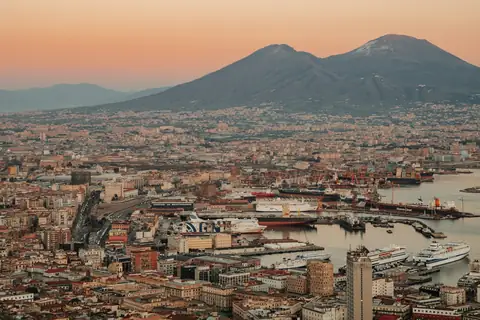
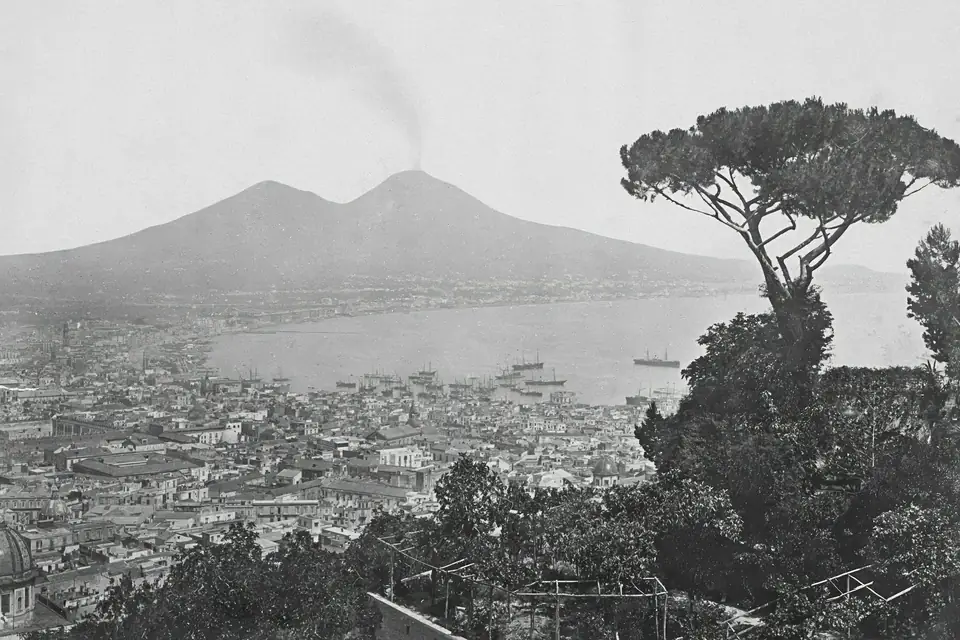
In the 18th century Naples was one of the largest cities in Europe: crowded, noisy and, for many of its people, desperately poor. Families with little or no kitchen of their own needed cheap, quick food they could eat on the go. That is exactly what pizza was: dough made from flour, water, salt and yeast, pressed flat, baked fast in a hot oven and topped with whatever was cheap that day. It was sold from small bakeries and by street vendors, often folded so you could carry it.
One wonderful eyewitness account comes from Alexandre Dumas. In his travel book "Le Corricolo" (published 1841-1843) he describes pizza as the winter food of ordinary Neapolitans: round, made from bread dough, and sold in different sizes depending on what you could pay. It might come with oil, bacon, lard, cheese, tomatoes or small fish, and its price, Dumas notes, rose and fell with the cost of those ingredients, a kind of thermometer of the market. It is an honest picture: not a feast, but the everyday meal of the poor.
Mastunicola and Marinara: pizza before and after the tomato
One of the oldest toppings handed down is the Mastunicola: lard, grated hard cheese such as pecorino, pepper and basil. When it appeared and where the name comes from are uncertain. Some link it to a "Mastro Nicola", others to the Neapolitan word for basil. What is clear is that this kind of pizza needed no tomato.
The tomato brought the Marinara: tomato, garlic, oregano and olive oil, with no cheese at all. The EU specification for Pizza Napoletana gives 1734 as the year it was created. Treat that as a statement in the specification rather than a date backed by primary sources. The popular explanation that it was named after the sailors and fishermen who ate it is likewise more tradition than proven history.
1889: the Margherita and the queen
No pizza history is complete without this episode, so here it is, clearly labelled:
In 2014 historian Zachary Nowak took a close look at this story in the journal "Food, Culture & Society". In short, his findings were:
- The letter is very likely not genuine. Comparing it with archive material, Nowak found that the signature, stationery and seal do not match real court correspondence of the time.
- There are no contemporary reports of the supposed royal pizza evening.
- By his analysis, the story was spread decades later, by the family that ran the pizzeria.
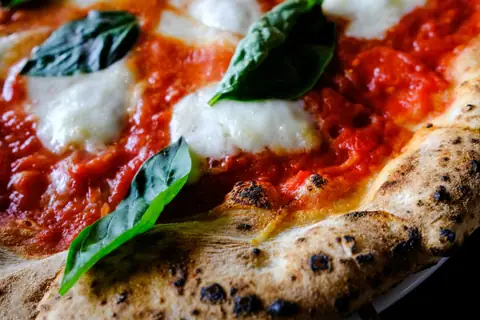
On top of that, the tomato, mozzarella and basil combination already existed. Even the EU specification for Pizza Napoletana dates the Margherita to between 1796 and 1810, while also retelling the 1889 story. Our honest summary: the name may well honour the queen, but there is no solid evidence that Esposito invented the pizza in 1889. Which, to be fair, does not make it taste any worse.
Emigration: pizza in America
Between the 1880s and the First World War millions of people left southern Italy, many of them for the United States, and pizza travelled with them. In New York, especially in Little Italy, bakeries and pizzerias opened to serve the Italian neighbourhood.
You will often read that Gennaro Lombardi opened America's first licensed pizzeria on Spring Street in 1905. That date is everywhere, but it is shaky. After years of archive work, pizza historian Peter Regas found no record of any such licence. According to his research, the Spring Street premises were already a pizzeria before Lombardi, probably run by Filippo Milone, and Lombardi can only be documented as owner from 1908. Regas places the earliest pizzeria confirmed so far in New York on Mulberry Street in 1894. So Lombardi's is certainly one of the oldest pizzerias in the US, but on current evidence probably not the first.
After the Second World War: pizza goes global
For a long time pizza remained a mostly Neapolitan dish even within Italy. Only in the 20th century, and especially after the Second World War, did it spread across the country through internal migration, tourism and restaurants. In the US, meanwhile, it grew from a neighbourhood food into a mass-market product with its own styles, big chains and frozen pizza. How different pizza looks across Italy alone is the subject of our guide to pizza in Italy.
Pizza in Germany
Germany's first pizzeria is usually said to be a restaurant on Elefantengasse in Würzburg that opened in 1952. Today it is known as Ristorante "Capri" with its "Blue Grotto". It was founded by a Würzburg woman and her future husband, an Italian from the Abruzzo region. To be honest about it: the "first pizzeria" title rests largely on the family's own account and on press reports. There is no official register of Germany's early pizzerias.
The real boost came with the German-Italian labour recruitment agreement of 20 December 1955. Over the following decades millions of Italians came to work in West Germany, and many stayed. Quite a few opened restaurants, and by the 1970s at the latest the neighbourhood pizzeria had become a normal part of German life.
Naples protects its own: AVPN, TSG and UNESCO
The more popular pizza became around the world, the stronger the wish in Naples to protect the original. Three milestones matter, and they are often mixed up:
- 1984: AVPN. Pizza makers in Naples found the Associazione Verace Pizza Napoletana. The association sets rules for "true" Neapolitan pizza and admits pizzerias worldwide that follow them.
- 2010: TSG. Regulation (EU) No 97/2010 of 4 February 2010 enters "Pizza Napoletana" in the EU register as a Traditional Speciality Guaranteed (STG in Italian). What is protected is a method, not a place, so a TSG pizza can be baked outside Naples as long as it follows the rules.
- 2017: UNESCO. The "Art of Neapolitan 'Pizzaiuolo'" is inscribed on UNESCO's Representative List of the Intangible Cultural Heritage of Humanity. The honour goes not to the pizza itself but to the craft and know-how of the pizzaiuoli, passed on in the city's bakeries.
What each of these labels actually means, with the numbers on dough balls, diameter, oven temperature and baking time, is explained in Pizza napoletana: AVPN rules, TSG label and UNESCO.
Pizza history at a glance
| When | What happened | How certain? |
|---|---|---|
| Antiquity | Topped flatbreads among Greeks and Romans | Documented, but no direct line to pizza |
| 997 | "duodecim pizze" in a charter from Gaeta | Charter documented, nature of the "pizze" unknown |
| 1544 | First European description of the tomato (Mattioli) | Documented |
| 1692 | Tomato sauce in Antonio Latini's cookbook, Naples | Documented |
| 18th c. | Pizza as street food in Naples | Well documented |
| 1734 | "Birth" of the Marinara | Only per the EU specification, not independently confirmed |
| 1841-1843 | Dumas describes pizza in "Le Corricolo" | Documented |
| 1889 | Margherita for Queen Margherita | Legend, evidence disputed |
| 1894 | Earliest confirmed pizzeria in New York (Regas) | Current state of research |
| 1905 | Licence for Lombardi's | Not documented |
| 1952 | Germany's first pizzeria in Würzburg | Widely repeated, based on family history |
| 1955 | German-Italian recruitment agreement | Documented |
| 1984 | AVPN founded | Documented |
| 2010 | "Pizza Napoletana" registered as TSG | Documented (EU regulation) |
| 2017 | UNESCO: Art of Neapolitan 'Pizzaiuolo' | Documented |
Pizza and tarte flambée: siblings in the oven
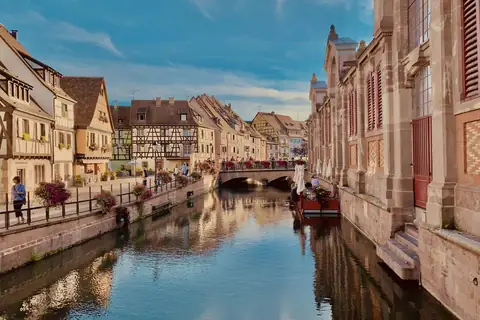
Is tarte flambée just "German pizza"? Not quite. Both belong to the big family of topped flatbreads from a hot oven, but their roots are quite different: pizza in the city kitchens of Naples, Flammkuchen in the farmhouses of the Upper Rhine. The full story is in our history of tarte flambée.
What history teaches us
The history of pizza is the story of a poor people's food that conquered the world. It has no single inventor and no birthday, just generations of bakers and pizzaioli working with flour, water, salt, yeast and fire. Legends like the one about the queen are part of it, as long as we tell them as legends. And the best part is that the foundation has hardly changed. If you want to get your hands floury, start with a good pizza dough.
The timeline
997
First record of the word
A lease from Gaeta requires, among other dues to the bishop, "duodecim pizze" - twelve pizzas. What they looked like is not recorded.
1544
The tomato is described
The physician and botanist Pietro Andrea Mattioli writes the first known European description of the tomato.
1692
Tomato sauce in print
Antonio Latini's "Lo scalco alla moderna", published in Naples, contains one of the earliest printed tomato sauces in Italy.
18th c.
Street food in Naples
Street sellers and early pizzerias in Naples sell flatbreads with lard, cheese, herbs and, increasingly, tomato.
1841-1843
Dumas on pizza
In "Le Corricolo", Alexandre Dumas describes pizza as the winter food of poor Neapolitans, topped with oil, lard, cheese, tomatoes or small fish.
1894
A pizzeria in New York
According to research by Peter Regas, a pizzeria on Mulberry Street is the earliest one documented so far in New York. Lombardi's 1905 licence has never been found.
1955
Labour recruitment agreement
West Germany and Italy sign a labour recruitment agreement. Italian workers, and later their pizzerias, arrive in German towns.
1984
AVPN founded
Pizza makers in Naples found the Associazione Verace Pizza Napoletana.
2010
EU TSG label
Regulation (EU) No 97/2010 enters "Pizza Napoletana" in the register of traditional specialities guaranteed.
2017
UNESCO heritage
The "Art of Neapolitan 'Pizzaiuolo'" is inscribed on the Representative List of the Intangible Cultural Heritage of Humanity.
Frequently asked questions
Who invented pizza?
Nobody in particular. Topped flatbreads go back to antiquity, while pizza in today's sense took shape in 18th and 19th century Naples as street food.
When does the word pizza first appear?
The oldest known record is a charter from Gaeta dated to 997, which lists twelve "pizze" as a payment. What exactly they were is unknown.
Is the story of Queen Margherita and the pizza true?
It is a legend. In 2014 historian Zachary Nowak argued convincingly that the royal thank-you letter is very likely not genuine, and the tomato, mozzarella and basil topping existed before 1889.
Was Lombardi's really the first pizzeria in America?
Probably not. Researcher Peter Regas found no evidence of a 1905 licence and documents earlier pizzerias in New York, the oldest confirmed one from 1894.
What is the difference between a Marinara and a Margherita?
A Marinara has tomato, garlic, oregano and olive oil but no cheese. A Margherita has tomato, mozzarella, basil and olive oil.
Sources
- Codex diplomaticus Cajetanus, vol. 1 (1887), charter XCVI, Abbey of Montecassino (scan on Internet Archive) (archive.org)
- Le Corricolo, Alexandre Dumas, Project Gutenberg (gutenberg.org)
- Sixteenth-century tomatoes in Europe - who saw them, what they looked like, and where they came from, Wageningen University & Research (research.wur.nl)
- Folklore, Fakelore, History: Invented Tradition and the Origins of the Pizza Margherita (Food, Culture & Society, 2014), Zachary Nowak (doi.org)
- Thoughts on the Origins of Pizzerias in America and Chicago, Culinary Historians of Chicago (culinaryhistorians.org)
- Anwerbeabkommen mit Italien, Bundeszentrale für politische Bildung (bpb.de)
- Commission Regulation (EU) No 97/2010 - "Pizza Napoletana" (TSG), EUR-Lex, European Union (eur-lex.europa.eu)
- Art of Neapolitan 'Pizzaiuolo', UNESCO Intangible Cultural Heritage (ich.unesco.org)
We check facts against these sources. Spotted a mistake? Write to us and we will fix it.